Second Semester Recap
Published:
My first year has flown by. Where last semester set the seeds for future projects, this one has been about consolidation.
Methods classes have been helpful – brushing up on both computational and qualitative analysis, and yes – as promised – learning R. The Prosocial Design Network recently published a report from our Expert Working Group on Connecting Researchers and practitioners to catalyze actionable research for healthy digital spaces. I also further developed my moderation experiment from last semester, presented at my research center’s workshop on “Guardrails in Communication Networks” earlier this month. This consolidation work will continue into the summer – more on that below!
I want to devote the bulk of this post to an exercise I carried out for Annenberg’s Proseminar. This is a course which invites two faculty members to join us each week to talk about everything from the intellectual foundations of their work, to their views on different epistemological approaches, to the “hidden curriculum” for building an academic career. Thanks to some of the more creative lines of questioning from my colleagues, we also learned about their favorite types of bean.
Revisiting my initial conceptual map
I had a reasonable idea of what I wanted to work on coming into graduate school – platform design, governance, how design choices influence behavior and beliefs, and the downstream consequences of that – and I laid this out in the conceptual map at the end of last semester. I stand by this map, but note its gaps.
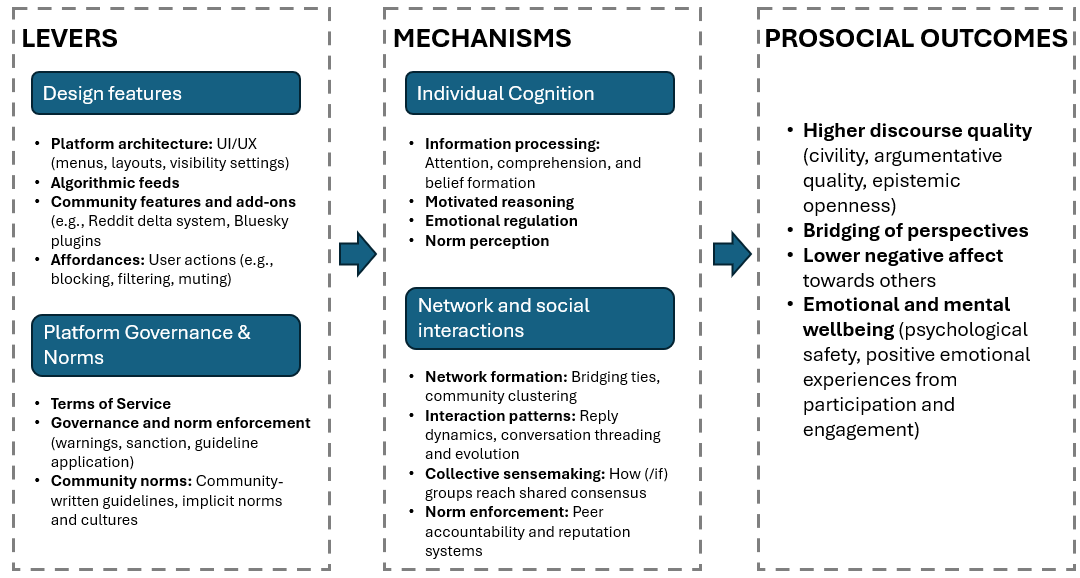 Figure 1: Initial conceptual map: levers, mechanisms, and outcomes — as shared in my last semester recap
The map described what I want to study, but not how these things actually connected. A senior industry mentor who looked at it told me the three pillars made sense in isolation, but he wasn’t sure how they flowed from left to right. The boxes are categories of things I find interesting, but not at the level of specificity I need to thread through to actual research: specific objects of study, mechanisms, and measurable outcomes.
There was also a deeper question I was circling around. Even if my research identifies design choices that produce better outcomes, these choices only matter if platforms actually adopt them. Profit-seeking platforms do not have obvious incentives to prioritize social welfare, and legislation is slow and reactive. There is a bigger question about the upstream incentives and power structures that determine whether prosocial designs get built in the first place. Given my background in public policy and strategy, I believe this is also a conversation I can contribute to through research.
And candidly, I still had a lot of uncertainty about the how of my contributions: the substantive knowledge, methods and theoretical traditions I commit to. A visiting speaker this semester made me realize I need a much deeper understanding of how algorithms work, for instance. This map tells me where to go. It does not tell me how to get there.
Taxonomy of the field
The Proseminar helped me think more clearly about how the field fits together in terms of theory (conceptual frameworks for how things work), methods (tools for testing those frameworks), and objects of study (the empirical phenomena we are trying to understand). It also shone light on a fourth related area – measurement and theory building – that sits somewhat separately, generating the constructs and instruments that make rigorous research possible.
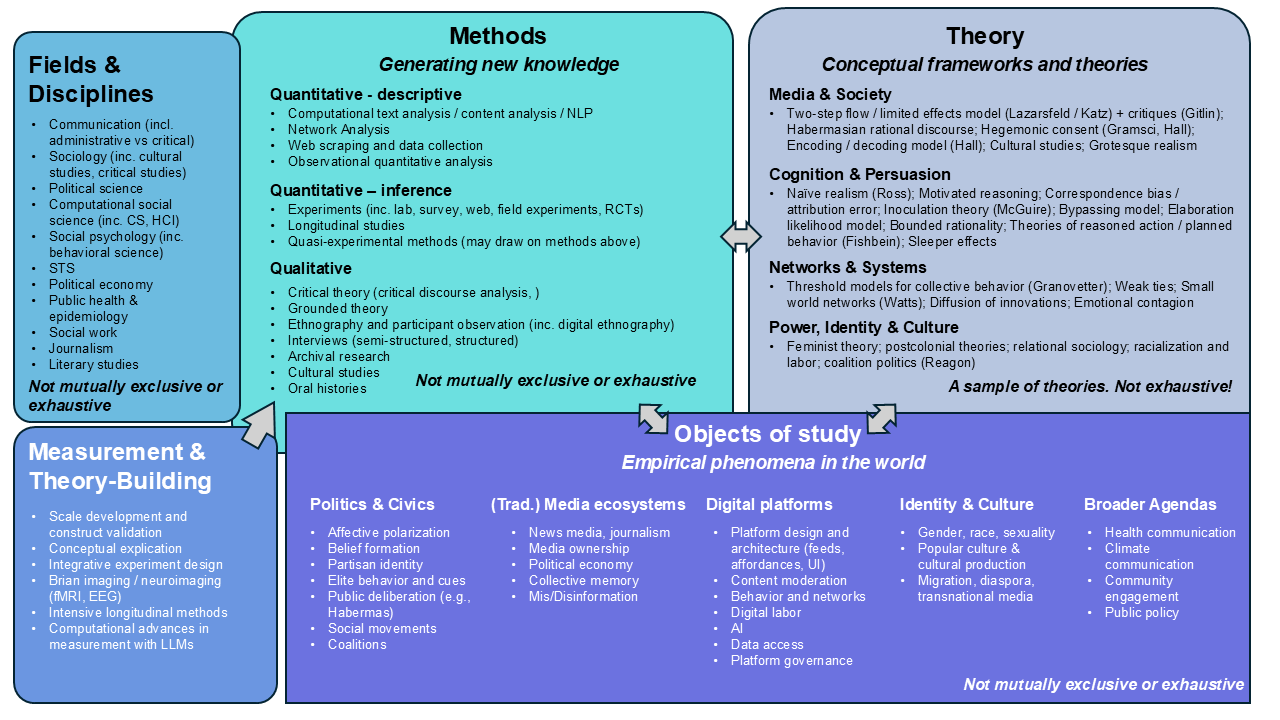 Figure 2: Taxonomy of the field of communication, as I have come to understand it
What I found most valuable was understanding how these quadrants connect, and that there is flexibility in this. Some researchers start from theory and use methods to test it. Others start from an empirical puzzle and let the object of study generate new theory. Objects of study themselves can be generative: natural language processing, digital trace data, and network analysis are all methods connected to the platforms we are studying that in turn help us to better understand the effects of those platforms at scale. Developing a new construct or research design is itself a scholarly contribution.
The field’s interdisciplinarity also results in less methodological orthodoxy relative to more traditional fields, such as economics or sociology. The Annenberg faculty’s work demonstrates this. Computational methods can be applied to questions that used to be the preserve of qualitative scholarship. Ethnographic and cultural approaches can be applied to technology and platforms, often the domain of empiricists. Applying a new theoretical logic or method to a familiar object produces a fresh angle. And these are sometimes needed to generate the complex answers for problems posed by complex sociotechnical systems.
Mapping the field, and my place in it
To make this more concrete, I ran two clustering analyses on text corpora I collected. The first used ~60,000 words of notes and reflections from Proseminar itself, that were chunked into ~80-word segments, embedded using OpenAI’s text-embedding-3-large-model, reduced to two dimensions, and clustered with k-means (k=9, selected after silhouette sweep). The map reflects the field as I encountered it this semester, filtered through my own note-taking and interpretations.
The second used a corpus of five recent abstracts or descriptive blurbs from each of the 27 Annenberg faculty, resulting in 135 works total, sourced from Google Scholar and ResearchGate. As abstracts foreground substantive content more than methods of epistemological orientation, this map is more explicitly topical. Clusters include platform labor, AI-assisted decision-making, social networks, politics and polarization, media and public institutions, health communication, cultural studies, misinformation, and metascience. Each faculty member is placed at the centroid of their works.
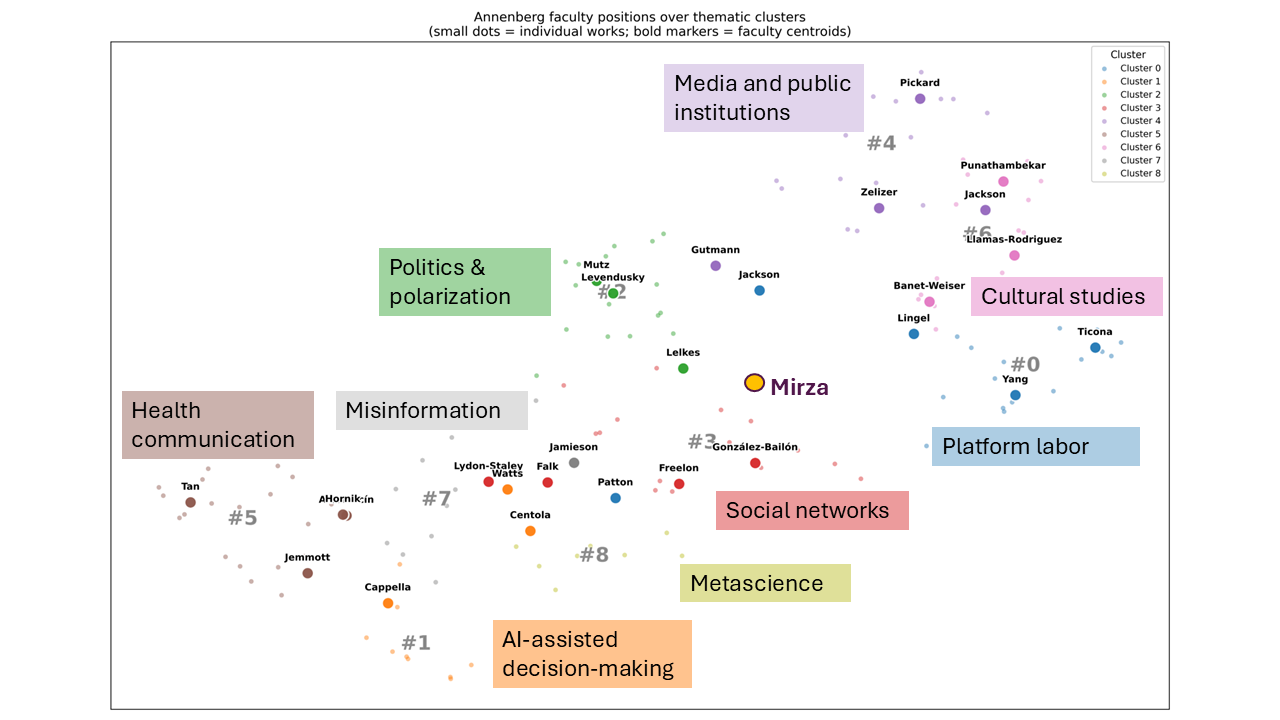 Figure 3: Map of the field, informed by recent faculty work — situating myself in it
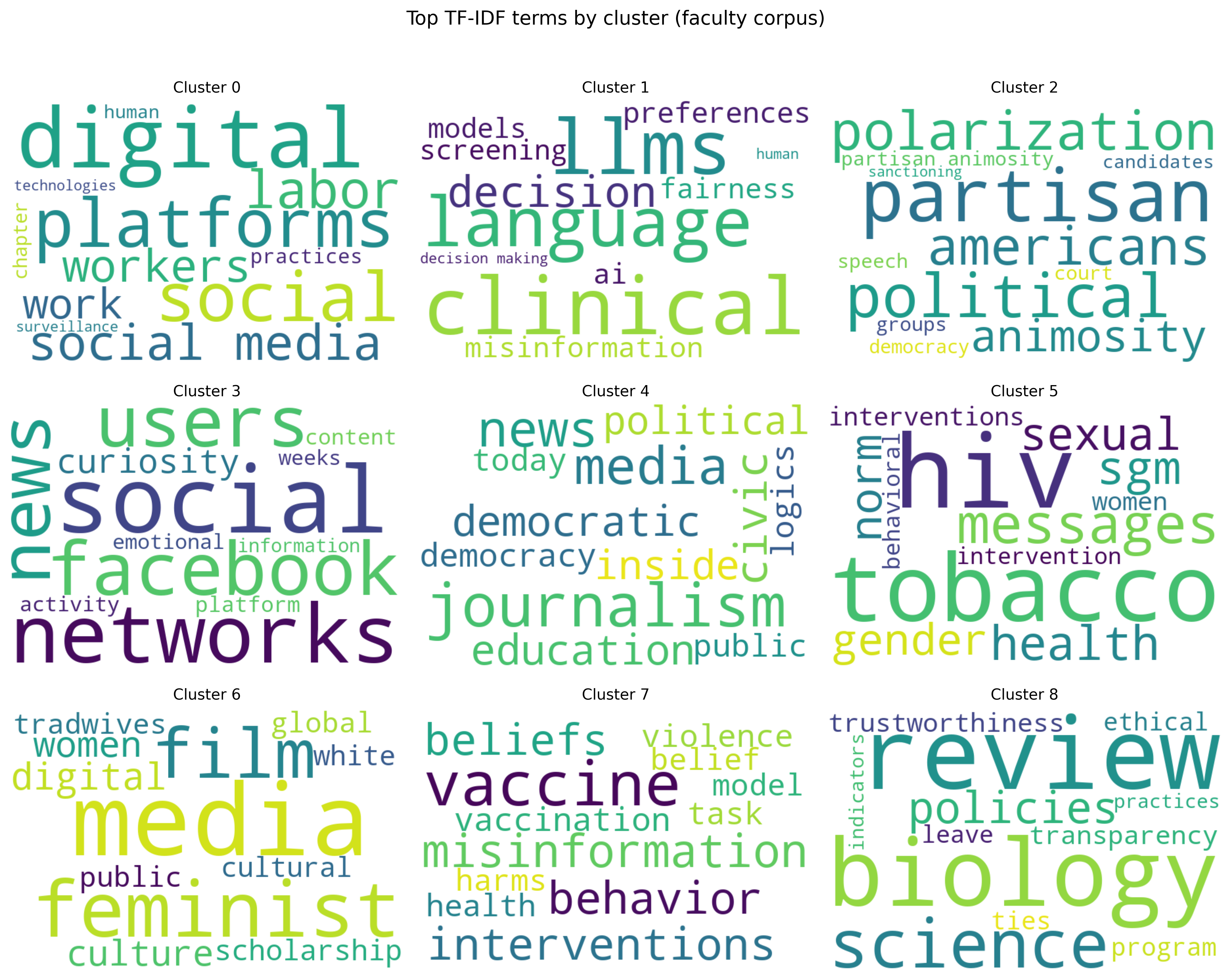 Figure 4: Top terms by cluster, based on recent faculty work
On the faculty map, I locate myself between the social networks and politics and polarization clusters, with media and public institutions and platform labor as adjacent clusters given my interests in platform policy and governance. My questions of interest – how design shapes beliefs and behavior, and in turn prosocial outcomes, how governance mechanisms influence design, and how research can inform practice – live at the intersection of those clusters.
Defining my research identity
I came into this program without a clear methodological home. My training spans economics, global health, public policy, and private sector research, including large-scale data analysis, interviewing, and strategy work. I was concerned about being a “jack of all trades, master of none”, especially given increasingly specialized job markets. However, I have come to see this breadth as something I can turn into a strength.
The approach I’m taking is to build deep substantive expertise in the objects I care about through reading, empirical work, and engagement with practitioners. I am developing stronger theoretical foundations in social psychology, sociology and network theory. Methodologically, I am building a core competency in computational content analysis, while drawing on experiments, network analysis, and qualitative methods where they are most useful. One professor described methods as a “toolkit for solving problems”. That framing has stuck with me.
I’m clear-eyed that this is a riskier path. Many departments expect students to signal a clear methodological identity and produce focused extensions of established research programs. The object-oriented approach leaves me between communities rather than firmly inside one. And there is always the risk that chasing too many interesting questions leaves none of them fully developed.
Another professor gave the analogy that this approach is like founding a successful start-up. As he described, for every MBA graduate who founds a successful startup, there are tens of failures, and tens of middle managers who chose the longer, steadier path to more moderate success. Coming back to graduate school was itself a risk of that kind. Especially in these early years of the PhD, I want to invest in building a research program that is intellectually distinctive and practically relevant across academic and applied settings.
Two risks of this positioning are worth naming. Firstly, an object-oriented identity could leave me on an island, untethered from established intellectual communities that generate citations, collaborators and conference invitations. Secondly, I could stretch myself too thinly if I’m not disciplined – especially since it is easy to get excited about new questions before developing and executing on existing ones.
Three commitments help me to manage these risks. I will root my work in specific intellectual traditions: social psychology for theoretical grounding and computational social science as a methodological anchor. I will also work collaboratively and publicly, sharing work in progress, presenting at workshops, and treating practitioners as ongoing advisers rather than occasional audiences. Thirdly, I will prioritize execution over ideation.
What comes next
This summer is execution, driving forward on three ongoing projects. I aim to develop my moderation experiment into a full paper, building on the results I presented at the CIND workshop. I also want to develop a proposal from last semester into a computational study of Reddit’s r/ChangeMyView delta system, as an example of a prosocial design feature that shapes discourse quality. Furthermore, through my qualitative methods class, I developed a grounded theory project examining internal platform governance through archival corporate documents.
I’ll end where I ended the proseminar paper, with a line of advice from an adviser at Harvard when I first decided to pursue a PhD:
“No one knows what life is going to look like in five years, and anyone who claims to is lacking imagination. So don’t worry about planning too far ahead. Instead, treat your career as a series of projects: find interesting work, do it well, and then move on to the next interesting project.”
If you are in research, industry, or policy, and any of this work speaks to you, I’d love to talk.